03 - The illusion of completeness
IIn many organizations, uncertainty gets treated as something temporary. The assumption is that if we gather enough information and analyze it carefully, clarity will eventually show up in a reassuring, complete form.
For a long time, I believed that too.
Early in my career I thought better preparation would eventually eliminate doubt, that studying a situation long enough and validating our assumptions would make the right decision obvious. Experience slowly corrected that belief. What I found instead was a deeper familiarity with incompleteness.
I used to think of incompleteness as a stage we'd pass through on the way to clarity. It turned out to be the condition decisions actually get made in. The context evolves while we're still observing it, and even a well-designed process only narrows uncertainty. It doesn't remove it.
I remember moments when every available piece of data had been gathered and something essential was still unresolved. The picture was detailed, but it wasn't complete. Waiting for that last degree of reassurance wouldn't have improved the situation. It would only have delayed it.
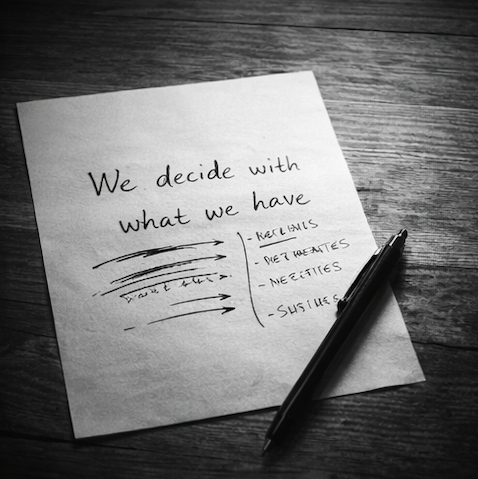
Over time I noticed that more detail doesn't lighten responsibility so much as sharpen it into view. The expectation of completeness encourages the search for confirmation before commitment, and treats doubt as something that has to disappear before action can be justified. In reality, doubt rarely disappears. It just becomes something you decide with.
Some of the most consequential decisions I've made came at the point where my understanding was sufficient to move forward, even with questions still open. What allowed movement, each time, was clarity about direction rather than certainty itself.
When leaders insist on a fully resolved picture, they shift the burden of judgment onto the information itself. Data is expected to deliver reassurance, and when it fails to, hesitation becomes structural. The organization looks cautious, while direction quietly erodes underneath it.
Look closely enough, and uncertainty doesn't disappear so much as change shape.
Leadership, as I understand it, begins with accepting that knowledge will stay incomplete. It takes a willingness to act within that limitation, knowing the consequences can't be fully predicted.
Completeness belongs to analysis. Uncertainty belongs to reality.
Confusing the two weakens systems in ways that are rarely visible at first.
If this resonates in your organization, I explore this further in keynote sessions. Click for more.
