07 – When competent people stop speaking
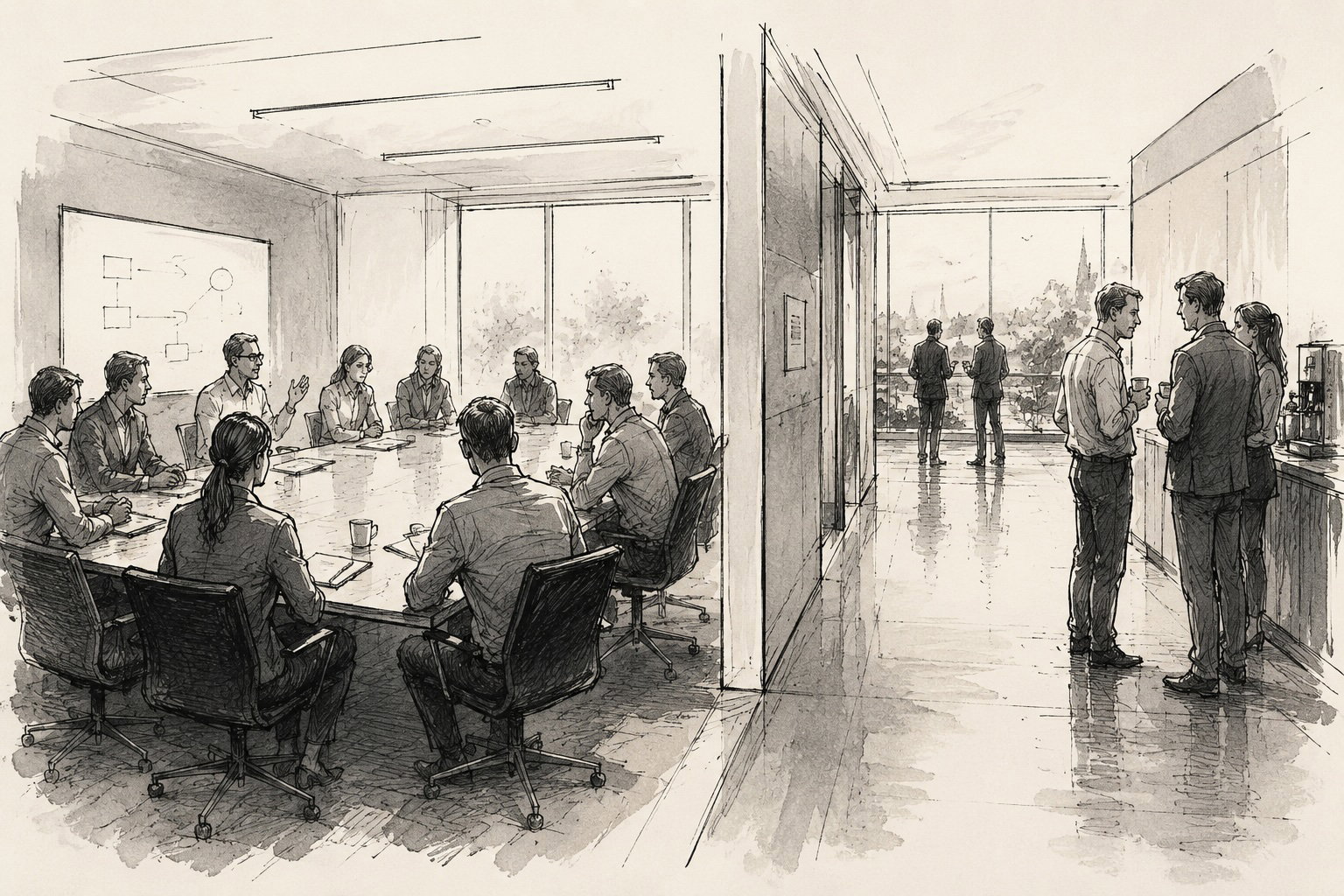
One of the first things I notice in an organization isn't who speaks. It's who gradually stops. In the beginning, meetings usually feel open. Assumptions get challenged, different perspectives get offered, and disagreement is accepted as part of working something out. Nobody expects every opinion to prevail, yet there's a shared belief that raising a concern can still influence what happens next.
That belief is easy to lose, and restoring it takes far longer than most leaders expect.
It rarely disappears after one difficult conversation. It fades through repetition: a concern gets acknowledged without being explored, or a question already has an answer before anyone's really considered it. People leave the room with the quiet impression that the conclusion had already been reached before they arrived, and they carry that impression into the next meeting without ever mentioning it.
Nobody decides outright to go silent. People just adapt.
Questions get phrased more carefully, doubts get softened before they're spoken, and some observations stay unspoken entirely, because experience has already suggested that raising them won't change anything.
From the outside this often looks like progress: shorter meetings, less friction, decisions that come together more smoothly. The conversation hasn't disappeared, though. It's moved somewhere it can no longer influence the decision. The meeting ends, people walk to the coffee machine or the car park, and the questions that never found their place around the table quietly resurface there instead. Phrases like "I have to admit I thought exactly the same way as you did," or "I chose not to bring it up, because I know how it'll end," probably sound all too familiar.
The people who reached that point first were usually the most experienced. Indifference had nothing to do with it. Their experience had simply taught them to recognize which discussions were still genuinely open and which had already been settled somewhere else.
Organizations tend to notice this much later than the people living through it. Procedures get rewritten, reporting lines adjusted, meeting formats redesigned, and none of it matters much once people have already concluded that speaking no longer changes anything.
Trust comes back at its own pace, on its own terms. People keep speaking as long as they believe their judgment still has a place in the room.
If this resonates in your organization, I explore this further in keynote sessions. Click for more.
