08 – The cost of appearing certain
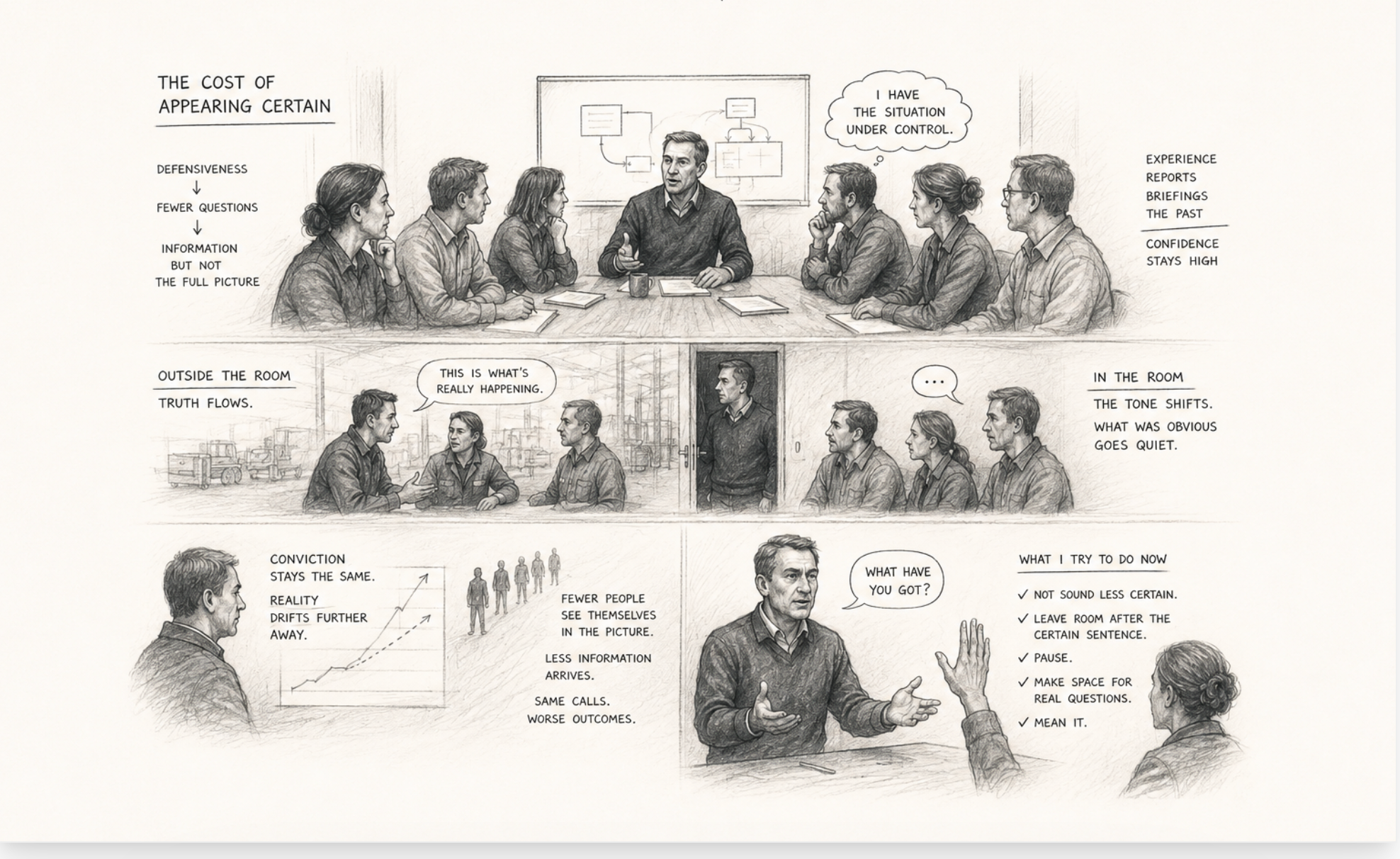
In a cockpit you notice almost immediately when a captain starts sounding defensive. The crew chooses its words more carefully, asks fewer questions, lets a doubt or two go unsaid. The captain keeps getting information. He stops getting the full picture. Outside the cockpit I saw the same pattern take much longer to show itself, in someone who never raised his voice at all.
For a while I worked with a manager whose picture of the operation kept drifting further from what was actually happening on the floor. He was experienced, and rock solid in his own judgement. In meetings he spoke with real authority about situations he knew from reports, from briefings, from what had happened before. The people running the operation every day often saw something else. On their own, the differences were small. They added up.
Outside the meeting room, a different conversation went on. People talked freely there about what was really going on. The moment he walked in, the tone shifted. What had sounded obvious five minutes earlier went quiet. Nobody decided to stop saying it. People had just learned that some comments didn't change much once he was in the room.
His conviction stayed exactly where it was. Fewer and fewer people still recognised their daily reality in what he described. He kept making the same calls, while the information that could have corrected them arrived less and less.
I've caught myself doing a version of this in briefings, in workshops. Say something with enough conviction and the room stops testing it, and you rarely find out until later whether that was a good thing.
What I try to do now is not sound less certain. It's build in room for someone to push back, deliberately, after the certain sentence rather than before it, and wait long enough for a real question to actually land.
"What have you got?", I ask, and I mean it.
